
Last Furry: Survival
StarUnionStrategy
4.5667.00 Reviews
- Version
- 2.0.0.1786948350
- Installs
- 1.00M
- Age Rating
- Teen
Screenshots

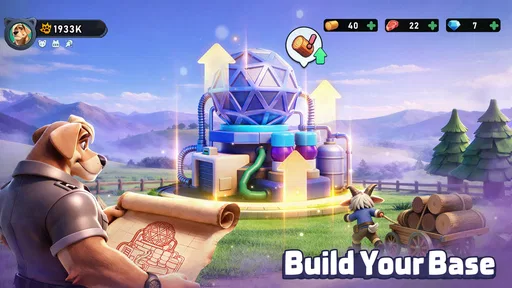
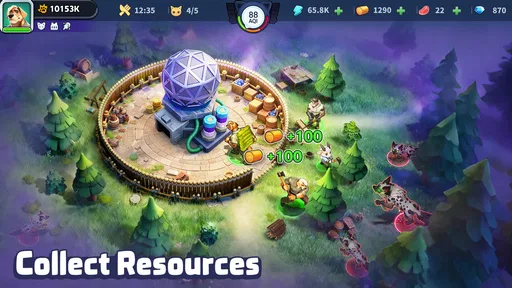


Our Review of Last Furry: Survival
 Analysis by Appyee
When I first started Last Furry: Survival, the idea that stayed with me was simple: clean air is not a background detail here; it is the resource that makes every other decision matter. StarUnion’s strategy game places survival under a toxic fog, so the central question is not merely how to collect more or build faster. It is whether I can keep a safe breathing space available long enough to make the next useful move.
That focus gives the game a more pressured rhythm than a typical settlement builder. In many strategy games, I can pause my plans, stockpile comfortably, or recover from a poor opening without much urgency. Here, the survival premise makes purified air feel like a constant responsibility. I found myself judging opportunities by their effect on safety first and progress second, which is a small but meaningful change in how I approach the genre.
The game is free to download and is aimed at a Teen audience. It has reached over a million installs and holds a 4.5 average from roughly sixteen thousand ratings, with hundreds of written reviews behind that score. Those figures suggest that the main survival loop has found a sizeable audience, but they do not remove the need to decide whether its particular pressure suits you. I would not recommend it simply because it is popular; I would recommend it if the purified-air premise sounds more interesting than a relaxed construction game.
Why purified air is the capability that shapes everything
The strongest idea in Last Furry: Survival is the way air purification turns survival into a planning problem rather than a decorative theme. The toxic fog creates an environmental threat, while purified air represents the space in which your furry survivors can continue operating. That makes the atmosphere itself part of the strategy instead of something I only notice during the opening story or in the artwork.
In practical terms, the capability changes how I value actions. A new structure is not automatically useful if it leaves the settlement exposed or consumes attention that should go toward maintaining breathable conditions. A trip outside a safe area carries a different weight from an ordinary resource run because the environment is actively working against the settlement. Even when I am thinking about expansion, I have to keep the air problem in view.
This is where the game separates itself from the usual city-building alternatives. A standard builder often asks me to balance food, materials, housing, production, and population growth. Last Furry adds a more immediate environmental constraint: the place I am developing must remain habitable. That makes the map feel less like an empty canvas and more like a hostile space that I am gradually trying to reclaim.
I also like that the premise gives the game a clear identity. “Survive the fog” is easier to understand than a long list of loosely connected systems. The store’s brief description presents breath as precious, and in play that concept works best when I treat every improvement as part of a chain: protect the living area, support continued activity, then use that stability to make a measured advance. The important insight is that purification is not just a defensive button; it is the foundation for taking risks.
The best way to think about the game is to treat breathable space as your operating budget. If I spend that budget carelessly, an attractive opportunity can become a setback. If I preserve it, even a modest gain can open the next stage of development. That mindset is more useful than chasing visible expansion simply because new territory is available.
How the air-focused loop feels during a normal session
My most successful sessions begin with a short assessment rather than an immediate push outward. I look at what is already safe, what needs attention, and which action will improve the settlement without creating a larger problem elsewhere. This sounds cautious, but the fog makes caution productive. I would rather establish a dependable base than reach for a distant objective and then discover that my breathing room is too fragile.
One non-obvious lesson is to separate “progress” from “movement.” Moving into a new area looks like progress, but it may not be the best use of a turn or a work cycle if the settlement cannot support the change. I get better results when I first make the existing safe zone more useful, then expand with a reason. That approach reduces the temptation to react to every nearby opportunity.
Another useful habit is to plan around recovery. A strategy game with environmental pressure can encourage constant forward motion, yet the strongest decisions often happen after I stabilize what I already have. I use quieter moments to prepare the next action, check whether my air situation can absorb it, and avoid spending everything on one ambitious move. This is especially important for players who normally enjoy fast expansion.
The air system also affects how I read setbacks. In a conventional builder, losing time may be irritating but harmless. Here, a delay can matter because the surrounding danger does not politely wait for my plans. That makes mistakes more memorable, but it also makes a successful recovery feel earned. I am not only repairing a structure or replacing a resource; I am trying to restore the conditions that let the settlement function.
For a short everyday session, I would play by setting one clear objective: improve the safe area, prepare a controlled expansion, or recover from a recent problem. That prevents the game from becoming a vague sequence of taps. The purified-air focus rewards deliberate sessions because each objective can be judged against the same question: does this leave the settlement more capable of surviving the fog?
A realistic scenario: the evening expansion decision
Imagine I have ten minutes before bed and want to make one meaningful improvement. A normal strategy game might tempt me to start a large construction project or send units toward the edge of the map. In Last Furry, I would first ask whether that project depends on a safe breathing area that is already reliable. If the answer is no, I would spend the session strengthening the foundation instead of beginning an expansion I cannot comfortably finish.
That is the sort of situation in which the game’s central capability proves useful. It gives a quick session a natural decision point. I can make progress without needing to complete a huge chain of tasks, because improving the conditions for future survival is itself a worthwhile result. The game fits players who enjoy leaving a settlement in a better state than they found it, even when the change is not visually dramatic.
For a longer session, the same principle works on a larger scale. I can choose a destination, consider what the fog will demand, and prepare before committing. The trade-off is that preparation may feel slower than simply pushing ahead. I see that as intentional rather than accidental: the game wants the environment to influence the route, not merely decorate it.
A further tip is to avoid treating every crisis as a reason to abandon the wider plan. I found it more helpful to identify whether the problem is local or systemic. If one area is struggling while the main breathing space remains sound, I can address the local issue without discarding all future plans. If the safe foundation itself is weakening, expansion should wait. This distinction keeps the air mechanic from becoming a source of panic and turns it into a diagnostic tool.
The trade-offs behind a breathable settlement
The central strength of the game is also its main limitation. Purified air gives the strategy a strong identity, but players who prefer broad experimentation may feel constrained by it. The environmental pressure naturally pushes me toward careful sequencing, and that can make the early game feel less free than a sandbox builder where I can build decorative or inefficient layouts simply to see what happens.
There is also a mental cost to constant risk evaluation. I enjoy games that ask me to think ahead, but I do not always want every decision filtered through survival maintenance. If I am looking for a calm game to play while distracted, the toxic-fog premise may be a poor match. The Teen rating also signals that the atmosphere and survival stakes are not designed as purely gentle decoration, even though the cast has a furry visual identity.
The free entry point makes it easy to try, but the presence of in-app purchases ranging from $0.99 to $99.99 per item means spending is part of the experience. I would approach those purchases carefully. The most sensible way to evaluate them is to play long enough to learn whether I enjoy the air-management loop without paying to bypass frustration. A purchase can only improve a game that already fits my tastes; it cannot make an unwanted survival system feel relaxing.
Compared with a traditional strategy alternative, I would choose Last Furry when I want environmental pressure to guide my decisions. I would choose a conventional builder instead when I want more freedom to experiment with layout, production chains, or long-term growth without a single survival condition dominating the plan. Compared with a faster tactical game, Last Furry is better suited to reflective planning than rapid reactions. Its appeal sits in the space between settlement management and environmental survival.
Device compatibility is relatively broad because the game supports Android six or later, but that does not automatically mean every older phone will deliver the same comfort. Strategy games can become tiring when interfaces feel cramped or sessions run longer than expected. I would install it on a device with enough screen space for planning and would avoid judging the game from a rushed first few minutes. Its main idea becomes clearer once I stop tapping for immediate rewards and begin making decisions around the safe zone.
Who benefits most from this particular design
I think the best audience is players who enjoy survival strategy but want a focused central problem rather than a large collection of unrelated systems. If you like asking whether an expansion is sustainable, whether a resource should be spent now or saved, and whether a safe position is worth more than a flashy short-term gain, the purified-air mechanic gives you plenty to consider.
It is also a good fit for people who enjoy thematic strategy. The fog is not just a story hook; it changes how I interpret the settlement. The furry survivors make the setting approachable, while the need to preserve breathable conditions keeps the decisions serious enough to matter. That contrast gives the game a personality that a generic post-apocalyptic builder might lack.
I would be more cautious recommending it to someone who dislikes timers, pressure, or resource decisions that can punish impatience. Players seeking a purely decorative base-building experience may prefer an alternative with fewer survival consequences. Likewise, anyone who wants a competitive strategy game centered on direct confrontation should understand that Last Furry’s most distinctive tension comes from maintaining life in a hostile environment, not from treating every problem as a battle.
Newcomers should give themselves time to learn the value of preparation. My first instinct in a strategy game is often to expand because expansion feels visible and rewarding. Here, the better opening is usually the one that makes the next expansion safer. Once that clicks, the game becomes less about guessing and more about reading the relationship between the settlement and the fog.
Developer, version, and long-term expectations
StarUnion is the developer behind the game, and the current release is version 2.0.0.1786948350. I would keep the version in mind when comparing impressions across devices or older discussions, since strategy games can change in balance and pacing as they are updated. The current build is the one that matters when deciding whether the air-centered loop works for you today.
The game launched on March 24, 2026, so its audience is still forming around a relatively new survival strategy experience. That makes the player rating useful as an initial signal, but I would still base my decision on the actual design: do you want a game where breathable territory is the key to every serious plan? If yes, the large install base makes it easier to see that the concept has attracted attention, while the written feedback can help you judge whether its pace matches your habits.
My final recommendation is straightforward. Install Last Furry: Survival if the thought of protecting a small pocket of clean air inside a dangerous world sounds more compelling than simply collecting and building. Play patiently, use short sessions to improve one part of the settlement, and judge purchases only after you understand the basic loop. Skip it if you want a relaxed builder with minimal environmental pressure or a combat-first strategy game.
For me, the game succeeds because it gives survival a concrete shape. I am not merely told that the world is dangerous; I feel that danger in the way I plan space, timing, and expansion. The result is a focused strategy experience with a clear trade-off: less carefree experimentation, but more meaning behind each safe step forward. That is a worthwhile exchange for players who want the atmosphere to be part of the strategy.
Verdict
Strengths of Last Furry: Survival
- Easy-to-learn survival mechanics for quick mobile sessions.
- Cute animal characters give the game a distinctive visual style.
- Exploration encourages collecting materials and discovering new areas.
- Progression systems provide goals beyond basic survival.
- Playable without requiring advanced gaming experience.
Limitations of Last Furry: Survival
- Energy or timer systems may limit longer play sessions.
- Resource gathering can become repetitive after extended play.
- Some upgrades may require considerable grinding to unlock.
- Small-screen controls can feel awkward during hectic encounters.
- Online features may depend heavily on a stable internet connection.
Other Releases by StarUnion
View All
The Ants: Underground Kingdom
Strategy4.2
Similar Picks in This Category
View All
Clash of Clans
Supercell4.5

Plants vs. Zombies™
ELECTRONIC ARTS3.7

Lords Mobile: Kingdom Wars
IGG.COM4.5

Clash Royale
Supercell4.4

State.io — Conquer the World
CASUAL AZUR GAMES4.1

Car Driving School : Car Games
Spark Game Studios3.9
Frequently Asked Questions
What is Last Furry: Survival about?
Last Furry: Survival is a survival-focused game in which you guide furry characters through a dangerous world filled with exploration, resource gathering, enemies, and ongoing threats. Progress generally depends on learning how to manage supplies, improve your character or base, and make sensible decisions when facing combat. It combines survival mechanics with a distinctive animal-themed presentation.
Is Last Furry: Survival free to download and play?
The game can generally be downloaded without an upfront purchase, but availability and pricing may vary depending on whether you use Android or iOS. Like many free-to-play survival games, it may include optional in-app purchases for resources, upgrades, cosmetics, or progression-related items. You should review the store listing and purchase settings before downloading, especially if children use the device.
Does Last Furry: Survival require an internet connection?
You should expect Last Furry: Survival to need an internet connection for at least some of its features, such as account services, advertisements, cloud synchronization, updates, events, or online interactions. Certain parts may work temporarily offline, but the complete experience can depend on connecting to the game’s servers. Check the latest store description if offline play is important to you.
Is Last Furry: Survival suitable for children?
The game’s furry characters may look friendly and appealing to younger players, but the survival format can still include combat, danger, resource pressure, and purchases. Its suitability depends on the child’s age, maturity, and comfort with these mechanics. Parents should check the official age rating, review privacy permissions, and enable purchase restrictions before allowing unsupervised play.
What devices are compatible with Last Furry: Survival?
Compatibility depends on the operating system, device model, available storage, and the minimum version required by the current release. Before installing, check the official Google Play or App Store listing for supported Android or iOS versions and the required download size. A stable internet connection and sufficient free storage are also recommended, since later updates may require additional space.
Play our best games!


